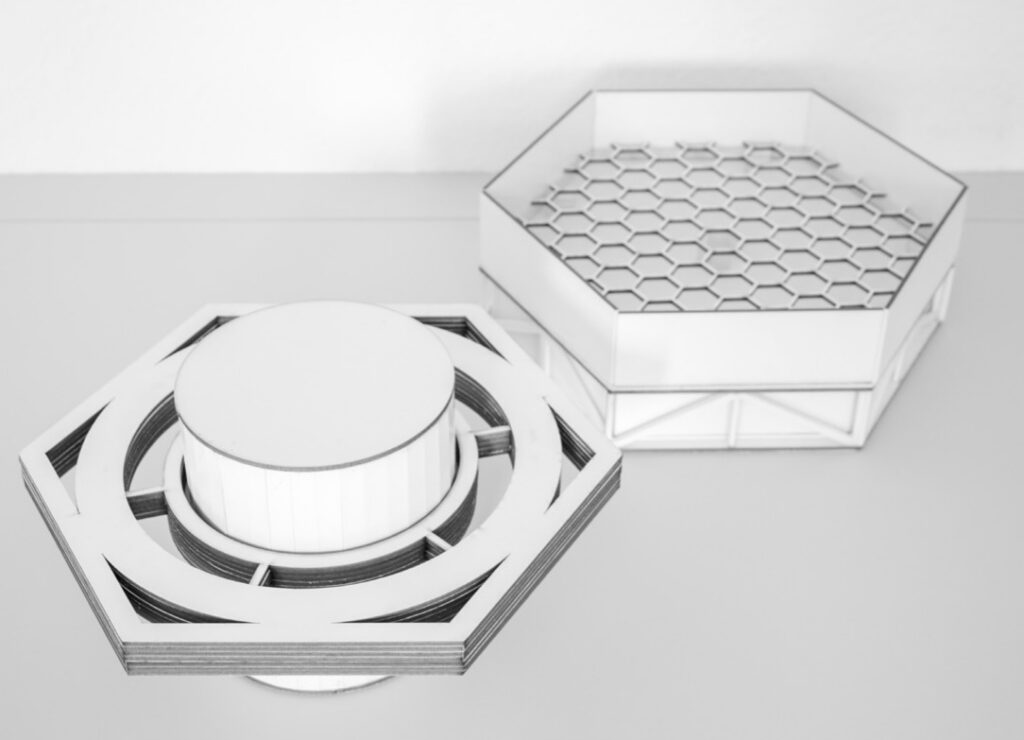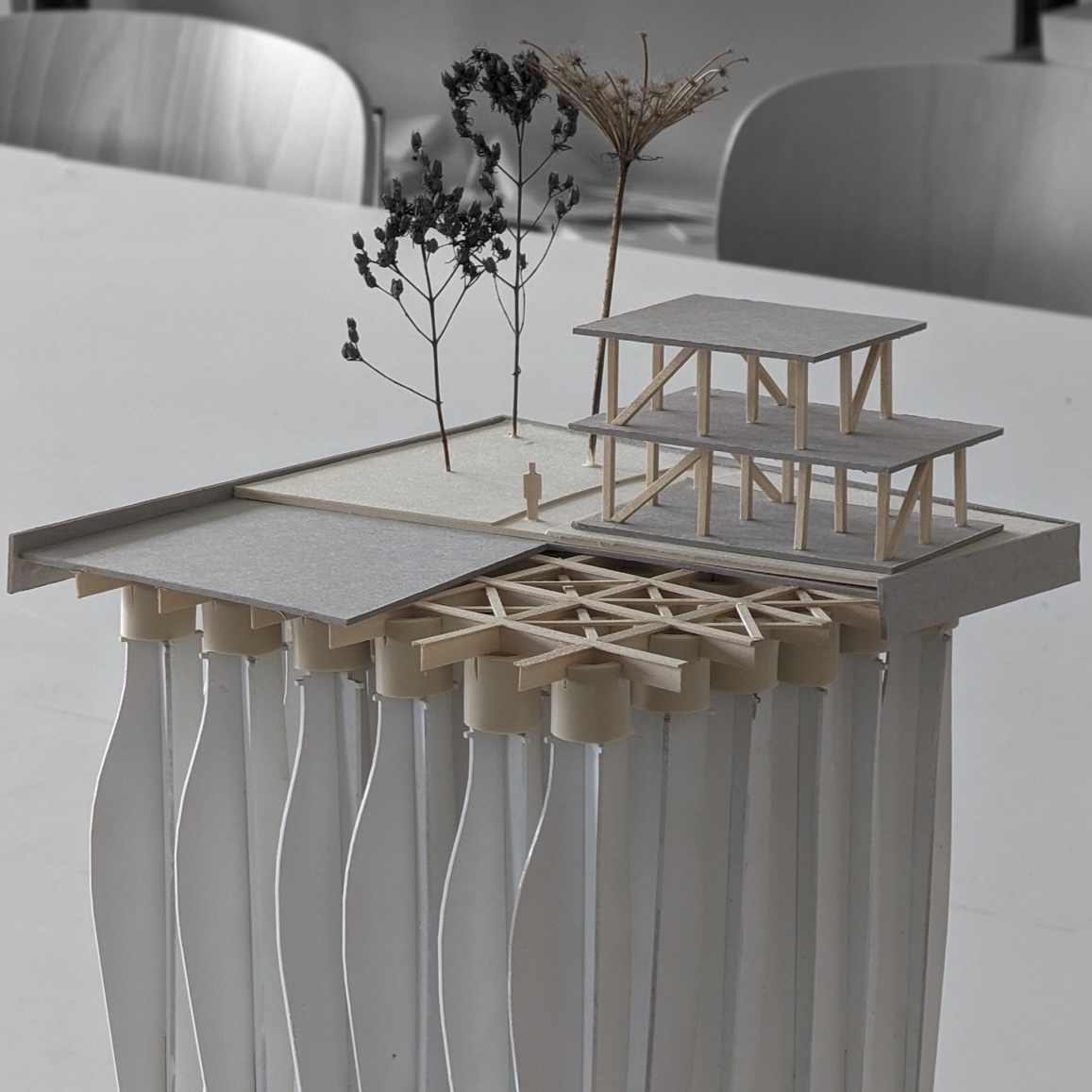


blade*pontoon
–
Pontons

The blade*pontoon project is developing concepts for artificial floating islands made out of discarded rotor blades from off shore wind farms that could expand liveable space at sea.
Leaving the giant blades in the anthroposphere not only enables significant carbon dioxide reductions, it is also more sustainable than their material recycling by using the complete rotor blades for high-volume applications, such as pontoon construction for floating islands, unloading of ships, fishing and seaweed-harvesting facilities, and renewable energy systems like solar, tidal or wave energy generators. The blade*pontoon project ensures that valuable knowledge, production technology and grey energy contained in each wind rotor blade are not lost forever, but are upgraded in their "second life” as floating ports and villages.
blade*pontoon presents application ideas and design solutions that efficiently use the durability and performance of a complete rotor blade with minimal impact on shape and material, for example, to provide buoyancy for an artificial island.
The calculation of the buoyancy force is based on the rotor blade Enercon E66.
The rotor blade type was installed in wind turbines between 1995 and 2005 and is currently one of the type generation affected by decommissioning in Europe. The rotor blades are each 31 m long. and have a volume of 98.8 m3. The buoyancy force and thus the possible load capacity, after deduction of the dead weight, is 94 tons.
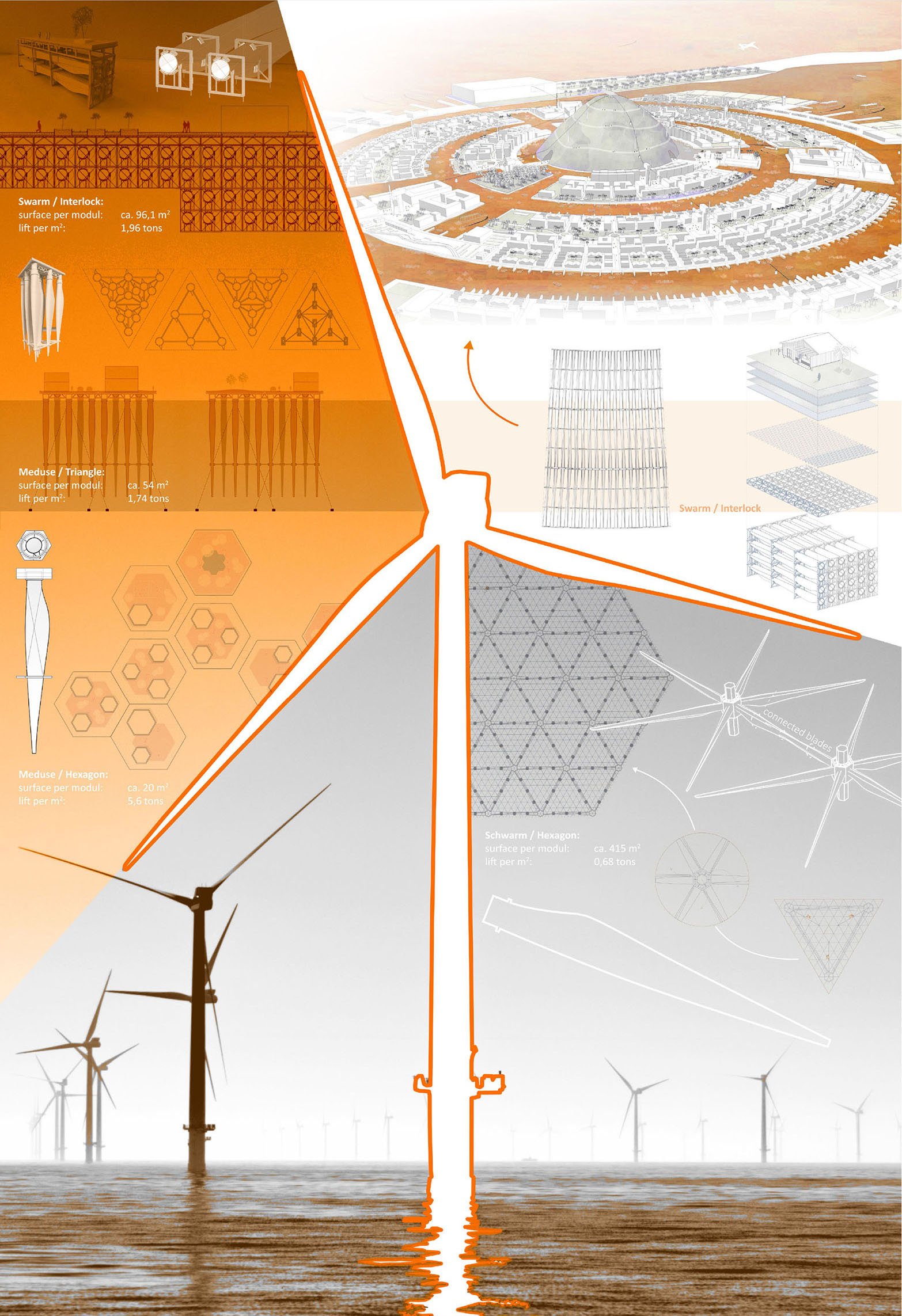
Basierend auf diesen festen Größen entstehen im Projekt blade*pontoon Konzepte für schwimmende Inseln als Bereitstellung von Land-Ersatz für Offshore-Häfen, Lagerung, Evakuierung, t, Siedlung, Energiegewinnung, Agrarwirtschaft und Fischzucht.
Tuvalu is one example. Because of its remote location in Oceania, the South Pacific island nation is difficult to reach. Only 11,500 people live on Tuvalu's nine islands - comparable to a small Central European town. On the densely populated atoll of Funafuti, which is one of the nine inhabited island groups of Tuvalu, live just over 6,000 inhabitants, about 60% of the total population.
As early as 1989, the United Nations placed the country on a list of several island groups that are in danger of sinking into the sea in the 21st century due to global warming. Already today, two of Tuvalu's nine atolls are almost completely submerged.
More about the solutions for Tuvalu: Floating Island